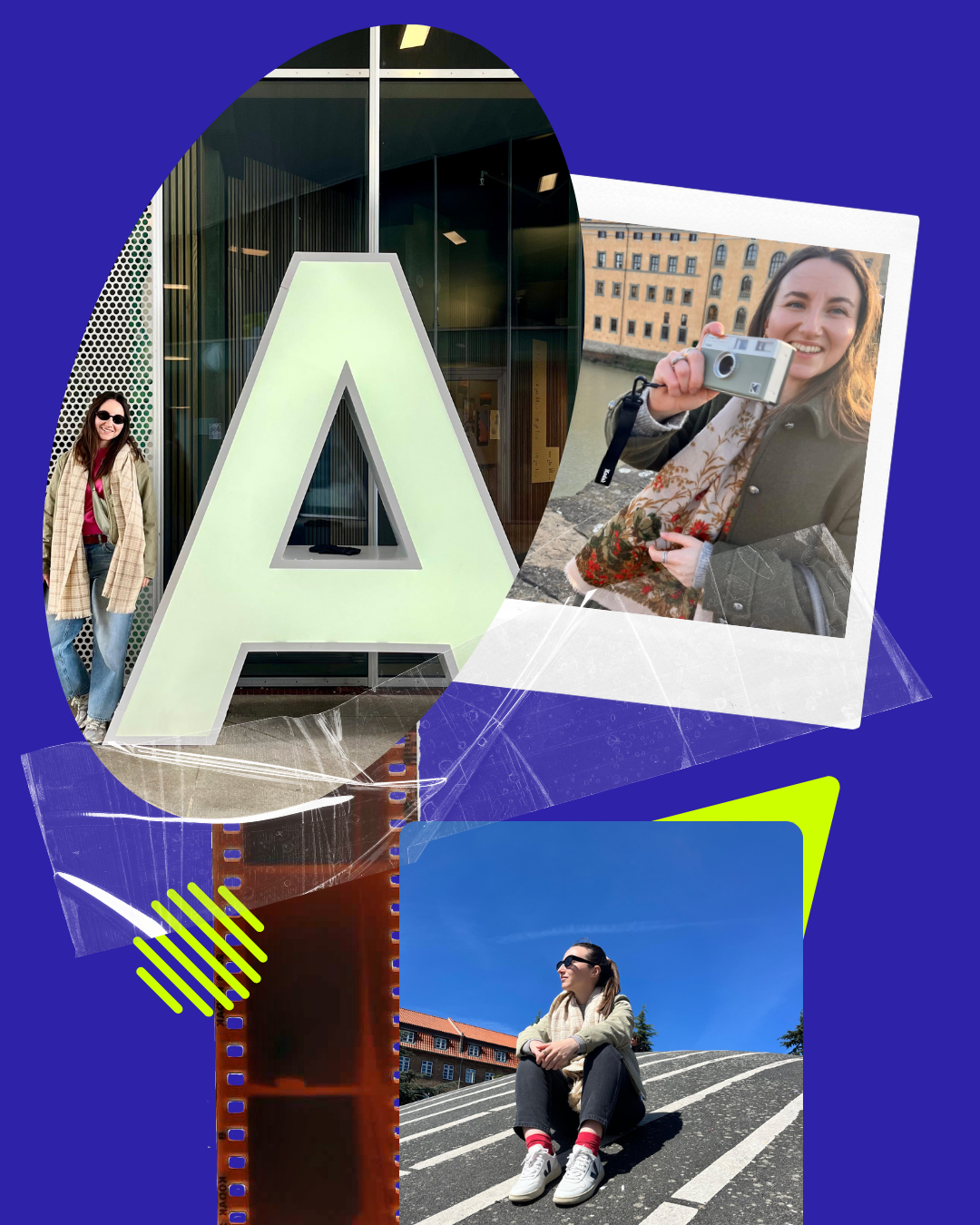
I'm a Product Designer with 5+ years of experience designing complex digital products.
I've worked mainly across the payments space, but fintech isn't really the point. What I enjoy most about being a designer (tough sentence to pronounce nowadays) is working on things where there's something to untangle, while keeping up with requirements that change and evolve along the way.
My path into Product Design wasn't linear. At all!
I studied Economics, followed by a 1st Level Master's Degree in Wine Communication (quite fascinating, if you ask me) and a Master's Degree in Communication & Experience Design.
That mix still shapes the way I work today. I naturally move between business context, communication, interaction and visual design.
I'm used to working in environments where the brief isn't perfect and the answer isn't already defined.
Sometimes I receive detailed requirements. Other times I start with a problem that still needs to be understood.
Depending on the project, my work can include competitor analysis, information architecture, user flows, UX/UI design, prototyping, responsive design, UX writing, documentation and implementation review.
I've been working within multidisciplinary teams where decisions often intersect with technical or regulatory constraints.
Before moving to polished screens — or anything digital, really — I grab a pen, a pencil, maybe some colors, and start mapping flows, connecting ideas and getting complexity out of my head and onto paper.
Not every sketch survives, but most good solutions start somewhere on real, good-smelling paper pages.
Clear hierarchy. Predictable interactions. Useful feedback. The right information at the right moment.
I believe good Product Design isn't about removing every bit of complexity, because sometimes complexity is simply part of the product. It's about making that complexity manageable for the person using it.
My work also has a strong visual and communication side, from websites and editorial design to brand applications and product communication.
That broader background helps me think about the experience as a whole. After all, experience is part of everyday life — and it comes in many different shapes.
I think the same is true for stories. Every product has one, and good design should know how to tell it. People are made of stories and experiences that shape the way they understand the world around them, and the products we design become part of those experiences too. That's why storytelling, to me, isn't something added at the end. It's part of how I give a product meaning, context and a voice.